
Mini-grant Jumpstarts the Work in Burke
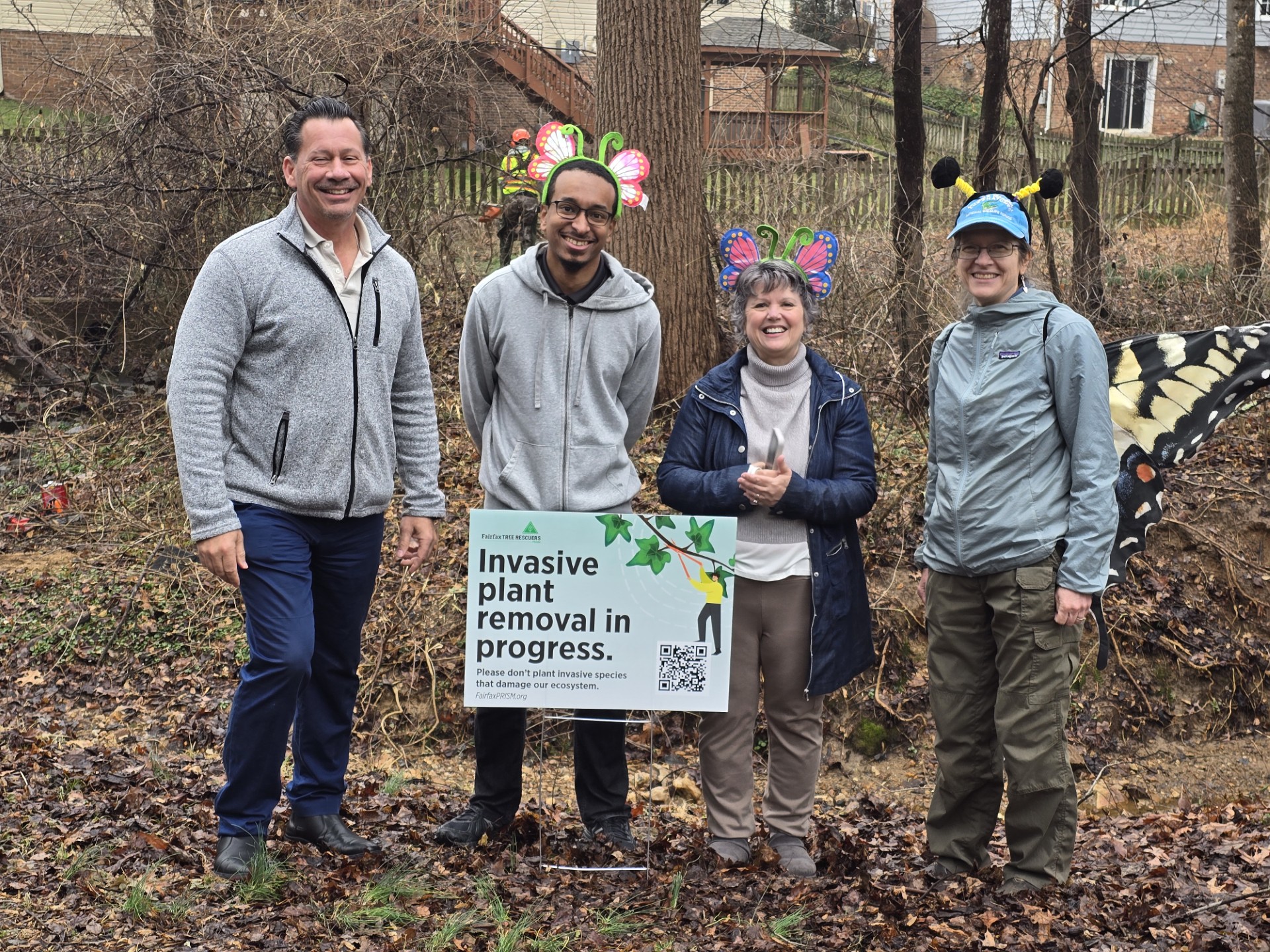
Volunteers in Burke Centre Conservancy had been working on invasive plants here and there but did not yet have an official plan to rescue the trees across the HOA, which (like Reston) consists of multiple Clusters. Volunteer Sandra Hickman joined the Open Space Committee and started collaborating with others to jumpstart their work in the New England Cluster with a mini-grant from Fairfax Tree Rescuers PRISM. A site visit from an experienced PRISM volunteer revealed Asian Wisteria growing by a creek. Since Asian Wisteria is a priority plant for Fairfax, being a terrible tree-killer yet uncommon enough to make eradication from the county a possibility, that became the target plant for the mini-grant.
Project Summary
The New England Woods Cluster implemented a targeted invasive species removal initiative to protect native tree canopy and restore woodland health across approximately 40 acres of HOA-managed open space, including riparian corridors along Pohick Creek.
This project combined three complementary strategies:
- Professional invasive treatment, focusing on Wisteria in priority riparian areas
- Volunteer-led mechanical vine removal, primarily targeting English Ivy
- Community education and outreach, including door-to-door tree rescue awareness
The effort represents the first phase of a broader, scalable invasive management program designed to expand Conservancy-wide. It demonstrates that a community-led, hybrid model — pairing licensed contractor expertise with organized volunteer labor — can achieve meaningful ecological impact at low cost.
Scope of Work Completed
Professional Services (Grant-Funded)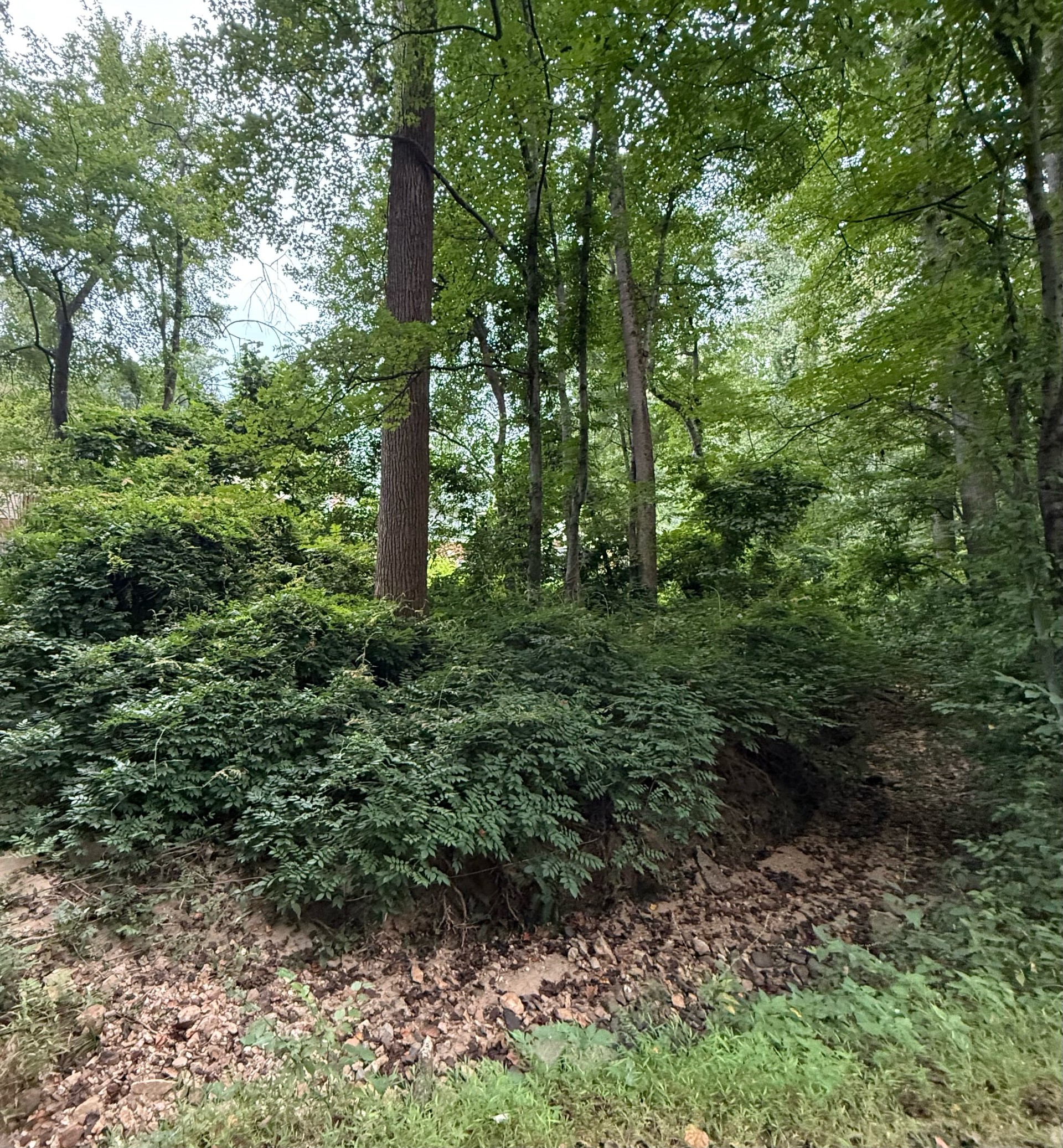
A licensed applicator (Wetlands Studies and Solutions, Inc) treated invasive Wisteria in priority riparian areas along Pohick Creek using the following methods:
- Mechanical cutting of vines at the base
- Cut-stump herbicide application (Triclopyr) in accordance with county and state guidelines
- Treatment focused on areas of highest canopy threat and proximity to the creek corridor
Volunteer Activities (Match Contribution)
Volunteers contributed three organized workdays spanning community outreach and hands-on restoration:
- Mechanical vine cutting — English Ivy and other climbing species
- Tree rescue work — severing vines at the base of mature trees to halt active strangulation
- Light debris management — cut material left onsite per ecological best practice
- Resident outreach — door-to-door canvassing with educational materials
- Mapping and monitoring of invasive spread patterns
Quantitative Results
| Metric | Result |
| Approximate Area Treated | ~40 acres (HOA open space, incl. Pohick Creek riparian corridor) |
| Mature Trees Rescued | 157 trees |
| Volunteer Events | 3 workdays (March 1, April 2, April 4, 2026) |
| Total Volunteers | 22 individuals |
| Total Volunteer Hours | 75 hours (valued at $34.79/hr) |
Required Compliance Confirmations
Financial Summary
| Metric | Result |
| PRISM Reimbursement Requested | $1,100.00 |
| Volunteer Labor Match (75 hrs × $34.79/hr) | $2,609.25 |
| Minimum Match Required | $550.00 |
| Total Match Achieved | $2,609.25 |
| Match Surplus Above Minimum | $2,059.25 |
Volunteer labor constitutes the full matching contribution. At $2,609.25, the match exceeds the $550.00 minimum by 374% — a testament to the depth of community investment in this project.
Education & Community Outreach
Community education was a core component of this project and a deliberate strategy, not an afterthought. Building resident awareness and buy-in creates the durable, self-sustaining stewardship culture that makes long-term invasive management possible.
Outreach Activities
- Door-to-door Tree Rescuer canvassing (March 1, 2026) — 4 volunteers, 24 hours
- Neighborhood communications via email and Facebook community page
- Volunteer recruitment campaign with event-specific calls to action
- On-site education during workdays — informal training in vine ID and safe removal technique
- Promotion of native plant alternatives (Plant NOVA Natives)
Reach & Materials
| Metric | Count |
| Residents Reached | ~1,700 |
| Volunteers Engaged | 22 |
| Tree Rescuer Door Hangers Distributed | 102 |
Project Impact & Outcomes
Short-Term Results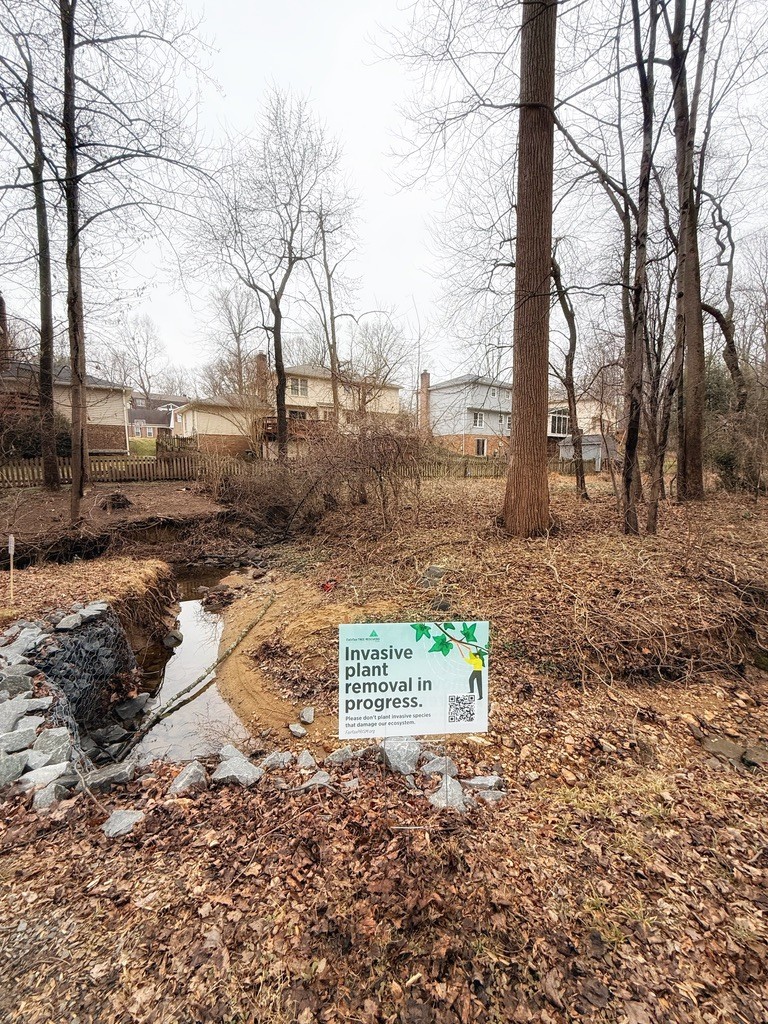
- 157 mature trees freed from active vine damage — immediate halt to canopy strangulation
- Invasive Wisteria treated along priority riparian corridor; reduced seed spread into Pohick Creek watershed
- Established a replicable operational workflow for future community-led invasive removal events
Strategic Impact
- Launched the first organized volunteer Tree Rescue Program in the cluster
- Demonstrated a scalable, low-cost model for HOA-led conservation that can be replicated across Burke Centre
- Built measurable community capacity: 22 trained stewards with hands-on invasive removal experience
- Reached ~1,700 residents with targeted ecological education — the multiplier effect that sustains this work beyond any single grant period
This project advances the cluster's long-term goal of reducing invasive cover by 75% in priority areas over three years. That goal is now meaningfully closer.
Lessons Learned
- Volunteer labor is highly effective for mechanical vine removal and scales readily with community engagement.
- Licensed contractors remain essential for herbicide-based control — the two approaches are complementary, not interchangeable.
- Early intervention is dramatically more efficient than delayed response: vines treated at a manageable stage require a fraction of the effort of mature infestations.
- Community outreach is not optional — it is the multiplier. The door hanger campaign generated volunteer sign-ups and resident awareness that will outlast the project itself.
- Keeping debris onsite (where ecologically appropriate) reduces costs and avoids unnecessary site disturbance.
Next Steps
- Expand volunteer workdays into an ongoing, seasonal vine clipping program
- Continue contractor-supported treatments for priority species, including lesser celandine
- Increase invasive mapping and monitoring through EDDMapS integration
- Scale this model to additional Burke Centre clusters, using New England Woods as a pilot case
- Pursue follow-on funding to sustain momentum and extend canopy protection into additional riparian areas