What Homeowners need to know
Mile‑a‑minute vine (Persicaria perfoliata) is an aggressive annual vine that smothers plants, blocks sunlight, and spreads with astonishing speed
The vine may look delicate at first glance but can overwhelm yards, forest edges, and stream corridors in a single season. Its common name comes from its explosive growth rate — the vine can climb up to six inches per day, forming dense, prickly blankets that bury everything beneath them, sometimes reaching 25 feet into treetops in one growing season! Once established, it quickly becomes a serious threat to native plants, young trees, and wildlife habitat.
What is it? Why is it a problem?
Mile‑a‑minute is an annual vine native to India and eastern Asia. It was accidentally introduced to the U.S. in the 1930s and has since spread throughout the Mid‑Atlantic, including Northern Virginia.
This invasive vine
- Smothers shrubs, tree seedlings, and groundcover
- Blocks sunlight, killing the plants it grows over
- Forms dense, prickly mats that deter hikers and workers
- Spreads rapidly by seed, water, wildlife, and soil movement
- Reestablishes every year from a long‑lived seedbank
Because it grows so quickly and produces abundant seeds, mile‑a‑minute can take over disturbed areas, forest edges, and streambanks in just a few years.
How to identify it
Mile‑a‑minute is surprisingly easy to recognize once you know the key features:
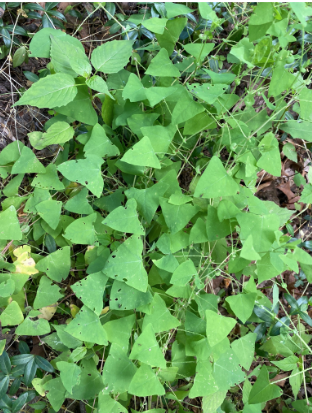
- Triangular leaves about 3 inches long
- Sharp, recurved barbs on stems and leaf veins (they cling like Velcro)
- Slender green stems that may turn reddish as they mature
- Small white flowers beginning in June
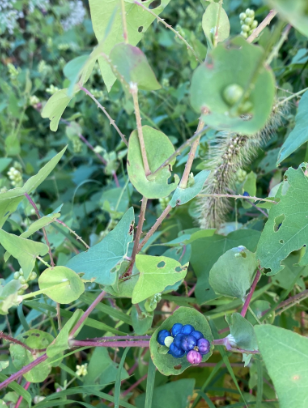
- Single‑seeded fruits that ripen from green to bright blue
- A distinctive saucer‑shaped leaflike structure (“a leafy bowl”) beneath flower and fruit clusters — a reliable ID clue
Seedlings emerge in early spring and grow rapidly toward the light, climbing over any nearby vegetation.
Where it grows
It prefers moist soils but can germinate in sun or shade. Disturbed areas — including places treated with broad‑spectrum herbicides — are especially vulnerable.
How it spreads
This vine is a prolific seeder. Fruits remain on frost‑killed vines into winter, where they may be eaten by birds or drop to the ground. Seeds can also float for days, allowing the plant to spread throughout entire watersheds.
Seeds remain viable in the soil for six to seven years, meaning long‑term monitoring is essential.
How to control it
Mile‑a‑minute is easy to kill but hard to eradicate because of its persistent seedbank. Consistent management is key.
Manual removal
- Plants pull easily due to shallow roots
- Wear gloves — the barbs are sharp
- Remove vines before mid‑June, when seeds begin forming
- Bag and dispose of any plants with fruits (even green ones)
Mechanical control
- Weed‑whacking close to the ground can suppress growth
- Avoid damaging desirable shrubs or young trees beneath the vines
Foliar herbicide
- Effective before seed set (usually before late June)
- Use aquatic‑approved products near streams or wetlands
- Follow all label directions
Pre‑emergent herbicide
- Useful in large infestations
- Apply in early to mid‑March before seeds germinate
- Do not use near waterways
Biological control
The mile‑a‑minute weevil (Rhinoncomimus latipes), approved by USDA, feeds only on this vine. It reduces plant vigor and seed production but does not eliminate the vine entirely.
After removal: restore the site
Because mile‑a‑minute smothers everything beneath it, cleared areas may be bare and vulnerable to other invasives. Replanting with native grasses, wildflowers, or shrubs helps stabilize the soil and outcompete new seedlings.
Monitor the area monthly through summer and remove any new vines before they take off.